
































Why You Are Climbing
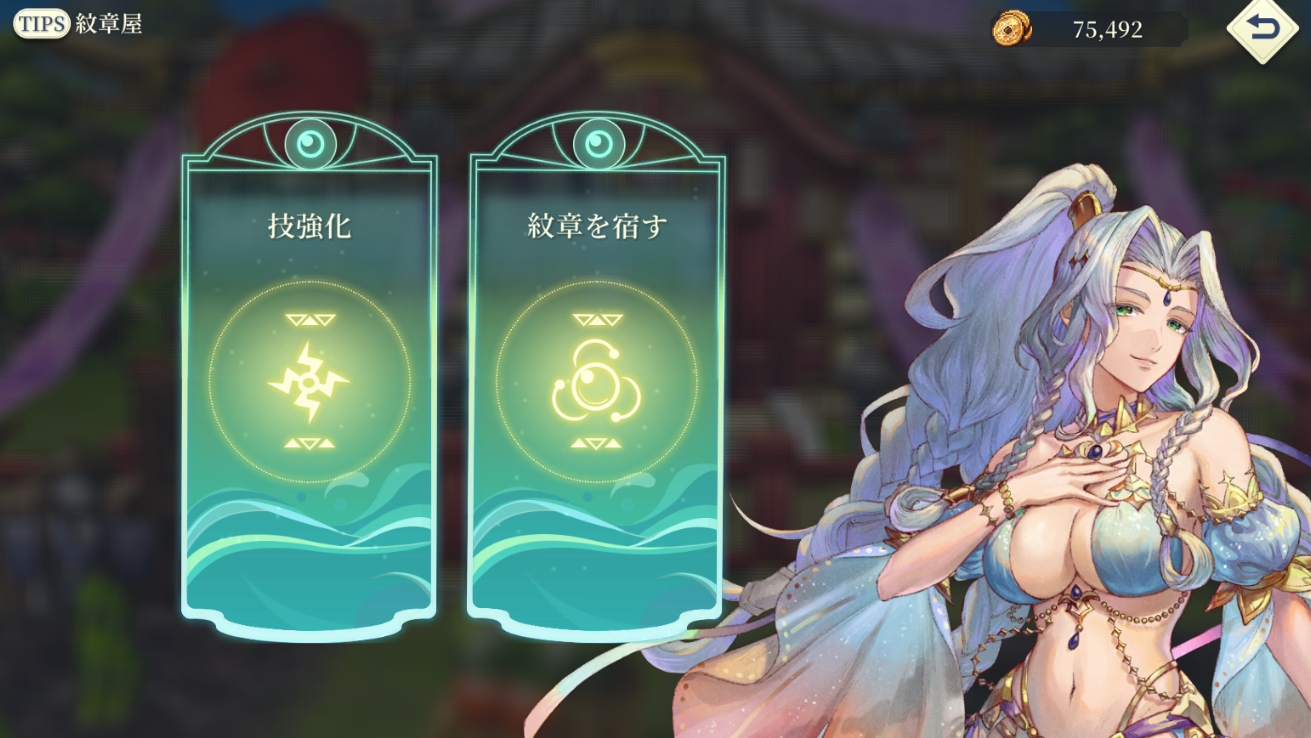
The tower exists to pay for Rune techniques. They are upgraded at the rune shop or directly from a character’s menu, the cost is a great deal of Potch plus Rune Pieces, and the payoff is higher damage, stronger effects, and better healing output. The Mirage Tower is the main source of Rune Pieces, alongside the exchange shop that opens with it.
The tower unlocks a few minutes after the rune shop, so in practice you meet both at once.
The full floor-by-floor breakdown, including which creatures wait on each floor, is on the Mirage Tower page.
The Three Objectives
Every floor of every chamber carries the same three objectives:
| Objective |
|---|
| Clear with 2 or fewer fighters KO’d |
| Clear within 48 actions |
| Clear within 36 actions |
Because the 36-action clear is strictly harder than the 48-action clear, a clean fast run scores all three at once. That consistency is useful: you never have to check the objectives before a floor, and the only question is whether your party can end fights quickly without losing three members.
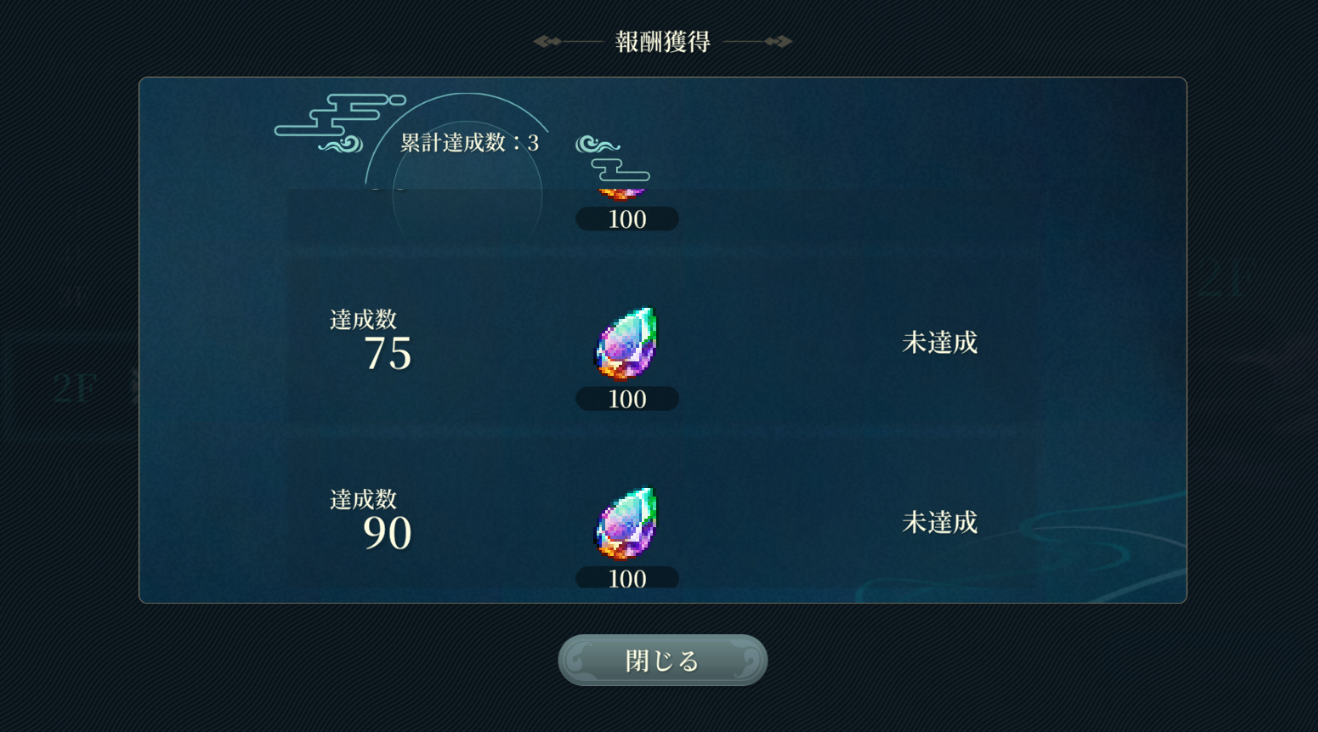
Objective completion is also what pays out crystals. The Perpetual Chamber gives up to 1,000 crystals across its objectives, and each elemental chamber gives 900.
Chambers and Schedule
The tower is really six separate climbs.
The Perpetual Chamber runs 50 floors and is open every day. Clearing floor 20 unlocks the elemental chambers, and reaching floor 50 recruits the companion who runs the tower.
The five elemental chambers run 30 floors each, restrict you to a team of that element, and open on a fixed weekly rotation:
| Chamber | Open on |
|---|---|
| Elemental: Wind | Monday, Sunday |
| Elemental: Fire | Tuesday, Sunday |
| Elemental: Water | Wednesday, Saturday |
| Elemental: Earth | Thursday, Saturday |
| Elemental: Thunder | Friday, Sunday |
Sunday opens Wind, Fire, and Thunder together, which makes it the heaviest tower day of the week. Saturday opens Water and Earth. The element restriction is the reason to spread your levelling across elements rather than concentrating on one.
Every fifth floor is a boss floor, and boss floors pay out summoning currency. That is ten boss floors in the Perpetual Chamber and six in each elemental chamber.

Team Power Thresholds
The tower tells you what it expects before you enter, and the numbers scale steeply:
| Climb | Floor 1 | Final floor |
|---|---|---|
| Perpetual Chamber | 14,800 | 80,000 (floor 50) |
| Elemental chambers | 24,100 | 72,100 (floor 30) |
The elemental chambers open at floor 20 of the Perpetual Chamber and start well above it in expected power, so there is usually a gap between unlocking one and being able to climb it. If an elemental chamber feels impossible, the fix is more levelled characters of that element, since the restriction leaves you no room to substitute.
Every floor is a fixed formation, which means a party that cleared a floor once will clear it again. Retrying a floor you failed is worth doing only after your roster changes.
Friend Units
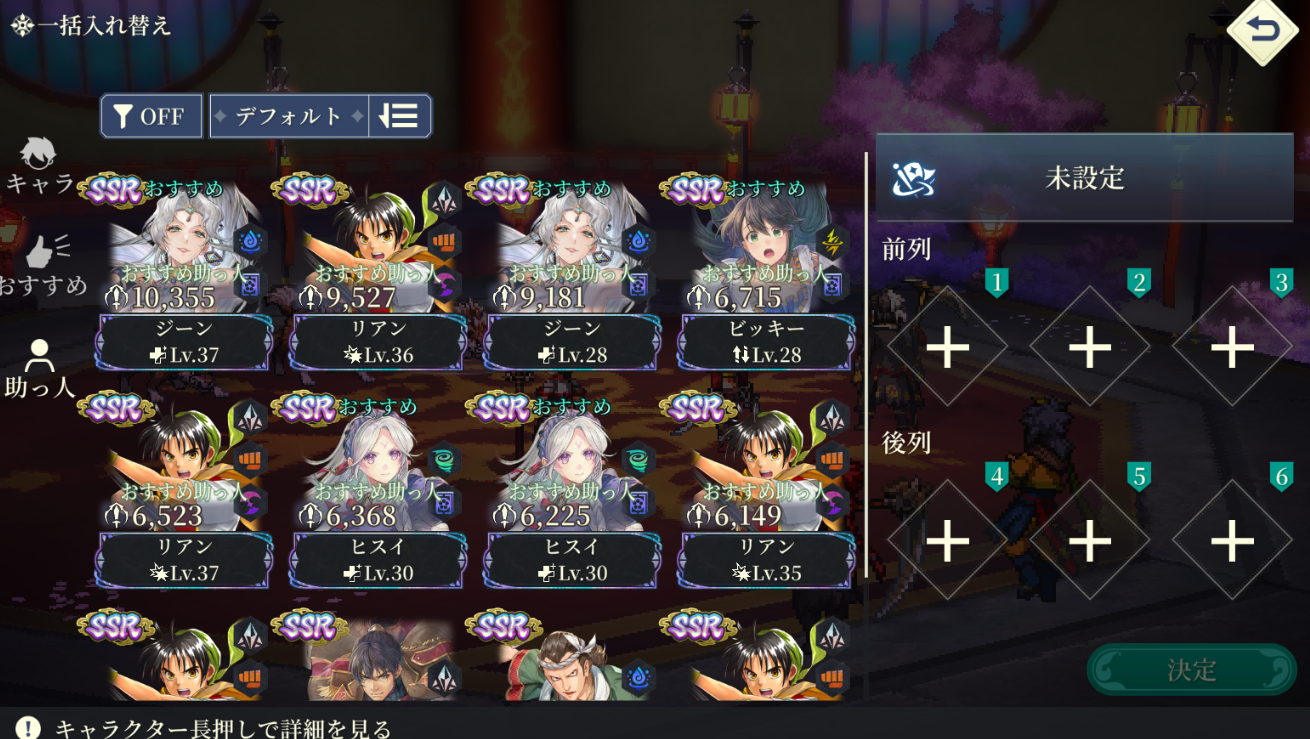
The tower is the one place where friend units are available, and they do two jobs at once.
- Using a friend unit awards +5 friend points, capped at 100 per week, and those points are spent in the exchange.
- A borrowed unit at high investment does the heavy lifting on floors your own roster cannot yet clear.
That second point is worth taking seriously. Your friend list will hold heavily limit-broken copies of
 Suikoden I Hero
, and a borrowed one at 20,000 combat power and six limit breaks outperforms your own at 9,000 with none. Check the list before every climb.
Suikoden I Hero
, and a borrowed one at 20,000 combat power and six limit breaks outperforms your own at 9,000 with none. Check the list before every climb.
The practical routine is to run auto-party to blow through the lower floors, then switch to manual once the floors start pushing back. Building the party by hand every single time is tedious enough that auto-party is the right default. If you would rather not bring a friend on a given run, untick the last box on the confirmation screen.
Friend unit uses appear to refresh daily.
A Sensible Climb Order
- Push the Perpetual Chamber to floor 20 first, since that is what opens the elemental chambers, then keep climbing as your power allows.
- Once the elemental chambers open, hit whichever ones are available that day, prioritising elements where your roster is deepest.
- Take every boss floor you can reach, because that is where the summoning currency is.
- Revisit floors you cleared messily. Objectives are per floor, so a floor cleared with three deaths still has crystals waiting.
- Finish floor 50 of the Perpetual Chamber when your power reaches 80,000 — it is a recruit as well as a clear.
Related Suikoden STAR LEAP Resources

Guide
Gear, Accessories and Runes: What to Farm
Equipment ranks and slots, elemental gear sets from EX bounties, why disguises cost more than they give, which accessory each role wants, and the runes worth 99,999 Potch in Suikoden STAR LEAP.

Guide
Buffs, Debuffs, and Positioning: The Hidden Half of Combat
Stat stages and their speed multipliers, how percentage buffs differ from stacking ones, row-based support passives, and how to aim a unite attack in Suikoden STAR LEAP.
Guide
Character Growth: Cooking, Training and Stars
How bond levels, the Talent Tree, offline EXP, shard training, and the Tablet of Promise combine to raise characters in Suikoden STAR LEAP.

News
Suikoden STAR LEAP: New Event RPG and a Free SSR Nanami
A four-episode Event RPG opens September 30 with up to 24,000 Fantasy Stones and two new SSRs, alongside a login bonus for Suikoden: The Anime's Nanami.

News
Suikoden STAR LEAP: Chapter 3 Story and a QoL Overhaul
New Chapter 3 story, the Emotions & Secrets banner with Rachana, Gremio and Hou, badges, and a September 21 update with bulk trading and eight party slots.