
































Three Systems, One Goal
Raising a character in Suikoden STAR LEAP runs through three headquarters systems that feed each other. Cooking raises bond levels, the training facility supplies experience, Talent Tree materials, and duplicate shards, and the 108 Stars Tablet converts bond levels back into limit breaks. Understanding how they connect is what stops you from grinding one of them in isolation and wondering why a character is stuck.
Cooking and Bond Levels
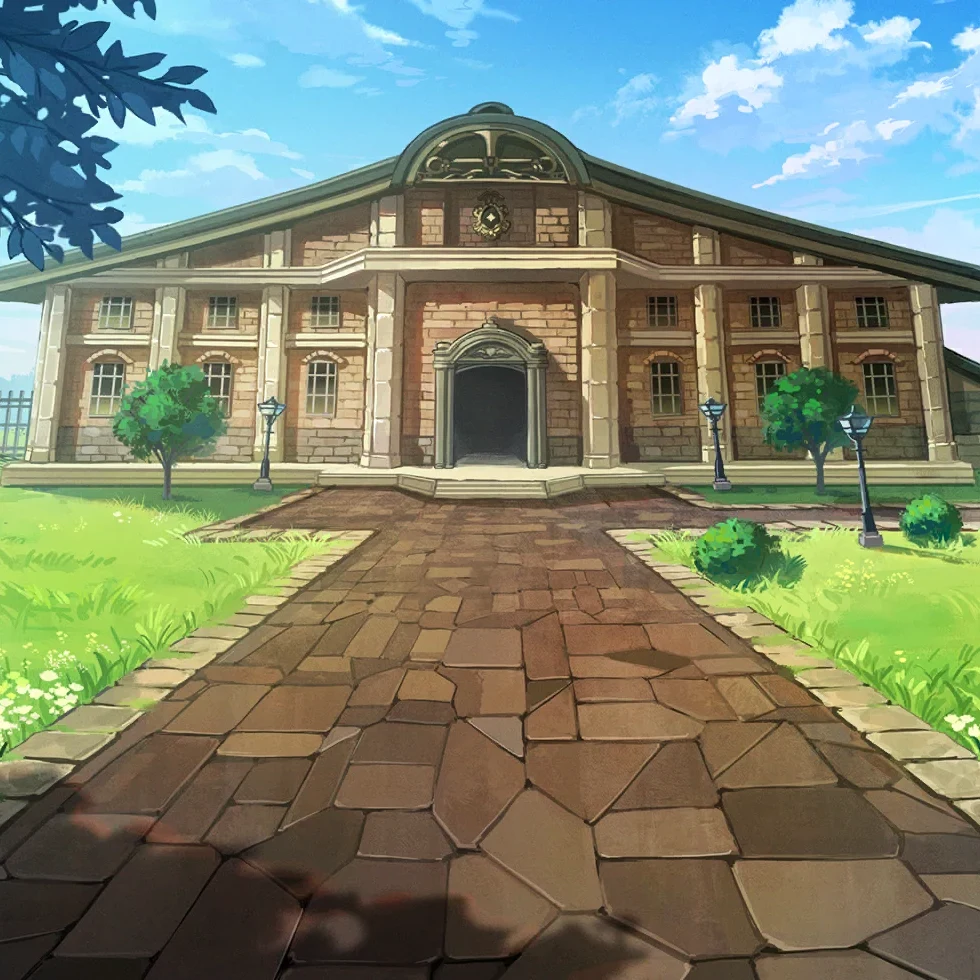
Cooking is the bond centre, and it does not consume minigame stamina, which makes it free progress every single day. You cook by speaking to
 Yua
, who stands to the left of the manor.
Yua
, who stands to the left of the manor.
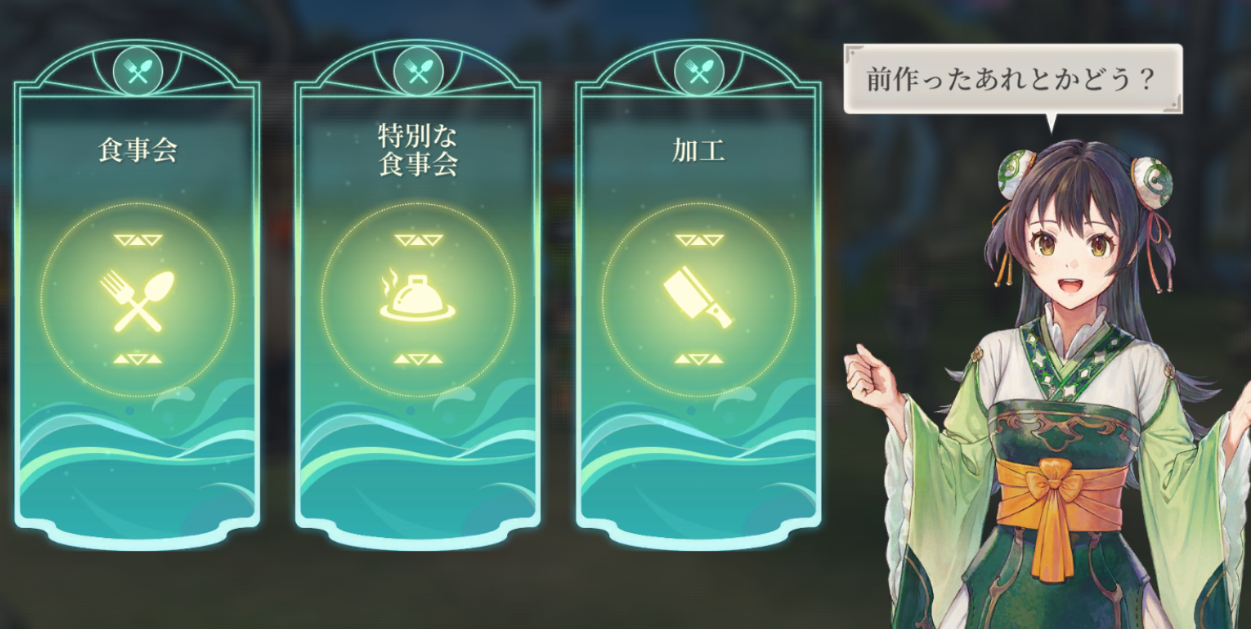
The menu holds three things, and it is clearest from the bottom up.
Craft combines the raw resources you gathered into cooking items. This is the step that turns a pile of minigame output into something usable.
Bond rank up is the second option, available once a character’s bond bar is full. Raising the rank needs specific crafted resources, and the screen tells you what is required and where the materials come from. Bond points overcap, so there is no waste in cooking with a character whose bar is already full — the excess carries into the next rank once you have the materials to unlock it.
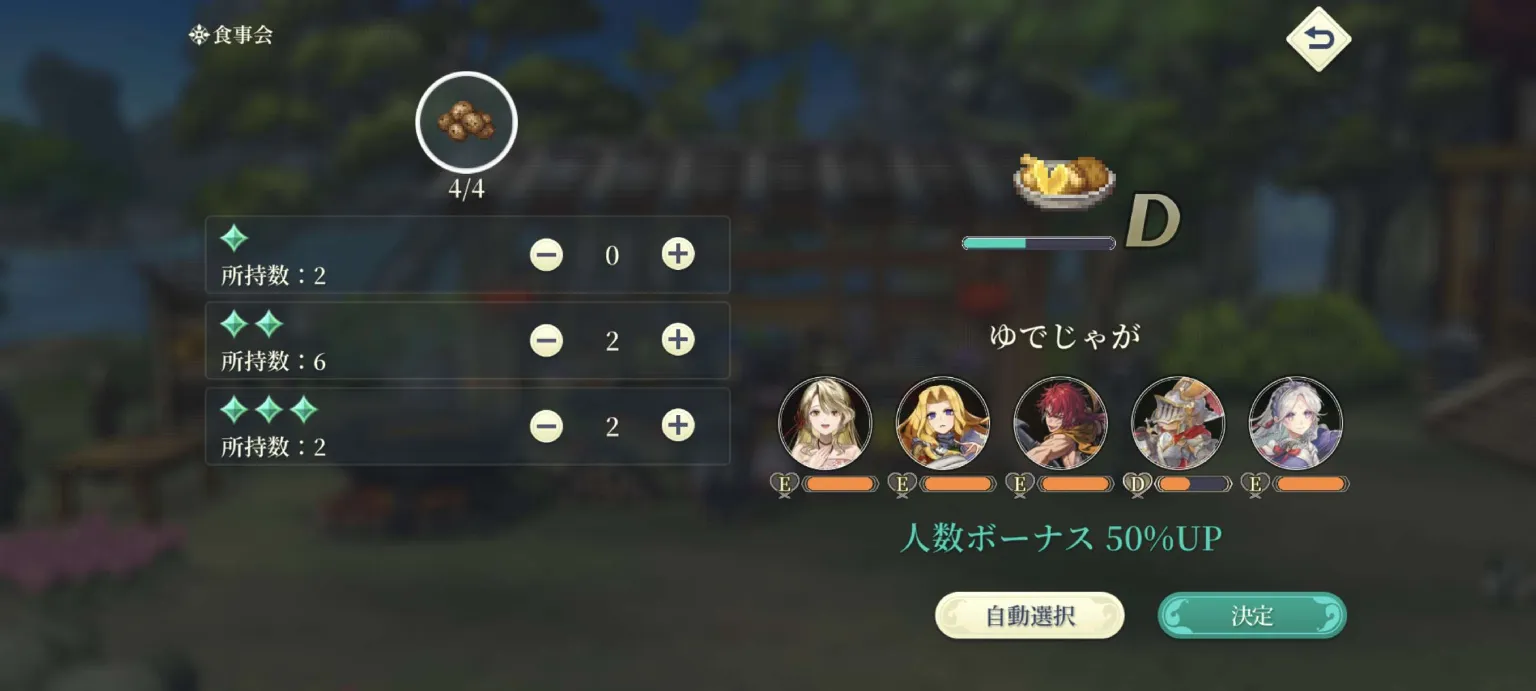
Cooking itself is the first option. Choose the companions you want to eat with, then choose the recipe. The arrows on the character icons and beneath each recipe show what that character likes and dislikes, and matching them is worth real points. Recipes are sorted by what you can actually make, from 5/5 ingredients down to 0/5, so the top of the list is always actionable.
Once you have picked a recipe you choose the grade of the ingredients you spend. Higher-grade ingredients produce a higher-ranked dish with stronger effects, which means more bond points. Larger groups eat more ingredients, so a five-person meal on top-grade materials is expensive and efficient at once.
You will see this menu constantly, and bond rank B is what unlocks a character’s Support Ability, so it gates your formation options as much as it gates the tablet.
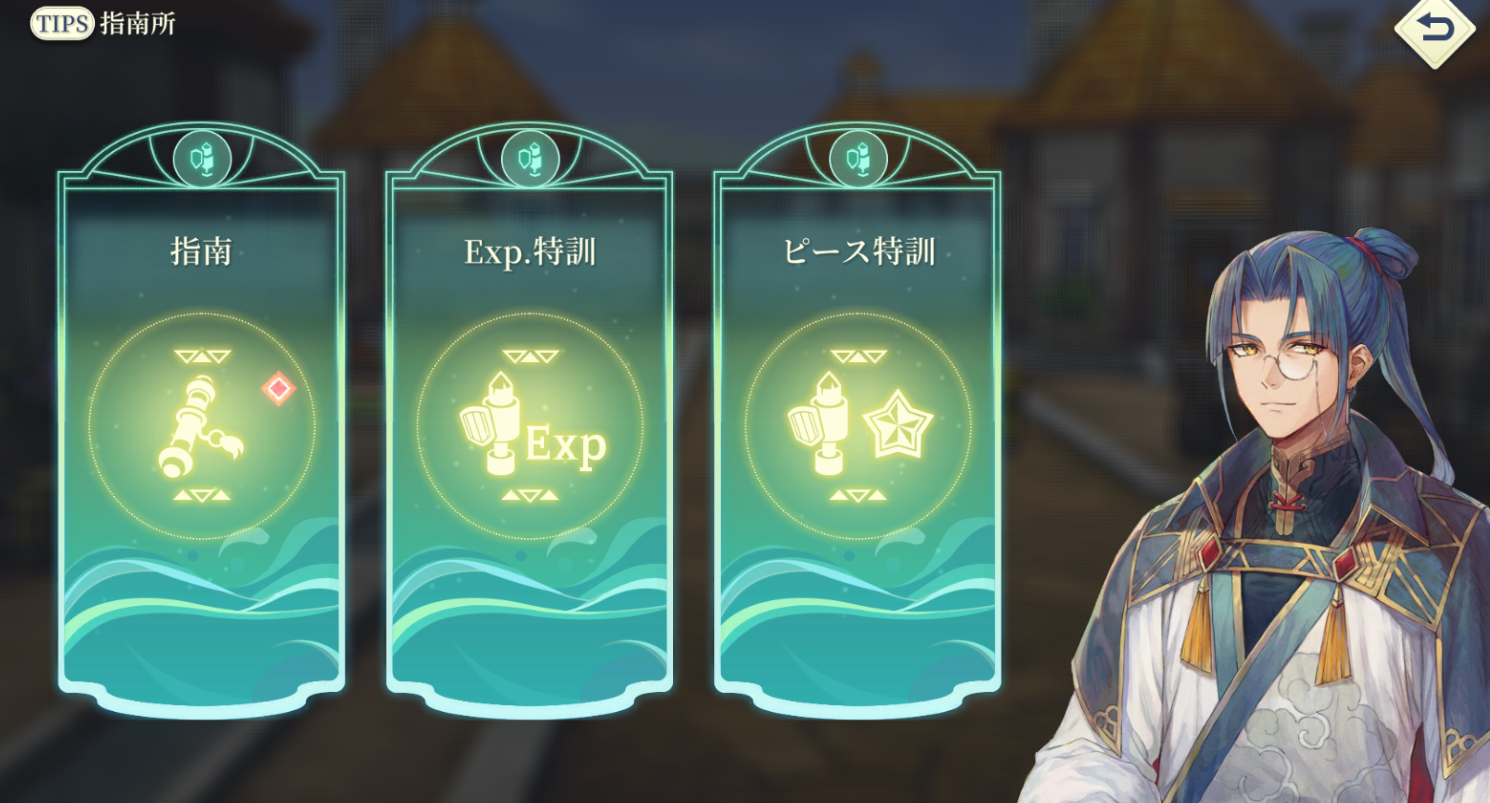
Shapur’s Training
The training facility unlocks in stages as your story and headquarters progress, adding a feature each time.
The Talent Tree
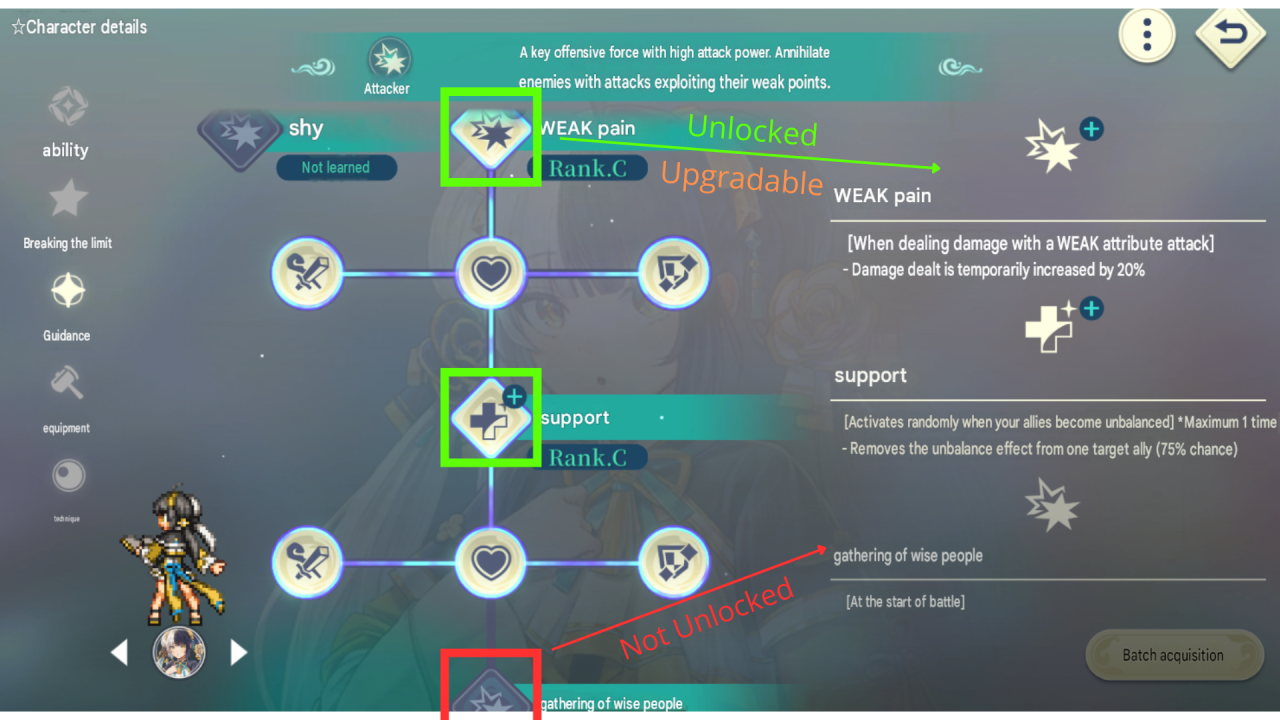
The first feature unlocks the Talent Tree nodes covered in the combat and team building guide. The materials come from
 Shirin
’s bounty hunts.
Shirin
’s bounty hunts.
- A batch unlock button sits in the bottom right of the Talent Tree.
- Tapping a node shows the materials it needs and links straight to the quest that drops them, once that quest is unlocked.
- Nodes sit behind Ascension tiers, so raising a character’s level cap is what opens the later nodes.
- The top-left node only opens after two limit breaks — tablet quests for non-gacha characters, duplicates for gacha ones.
- Nodes showing a letter rank are the character’s passives. They start at rank C and climb to rank S as you feed them levels and materials, with the effect scaling each step.
EXP training
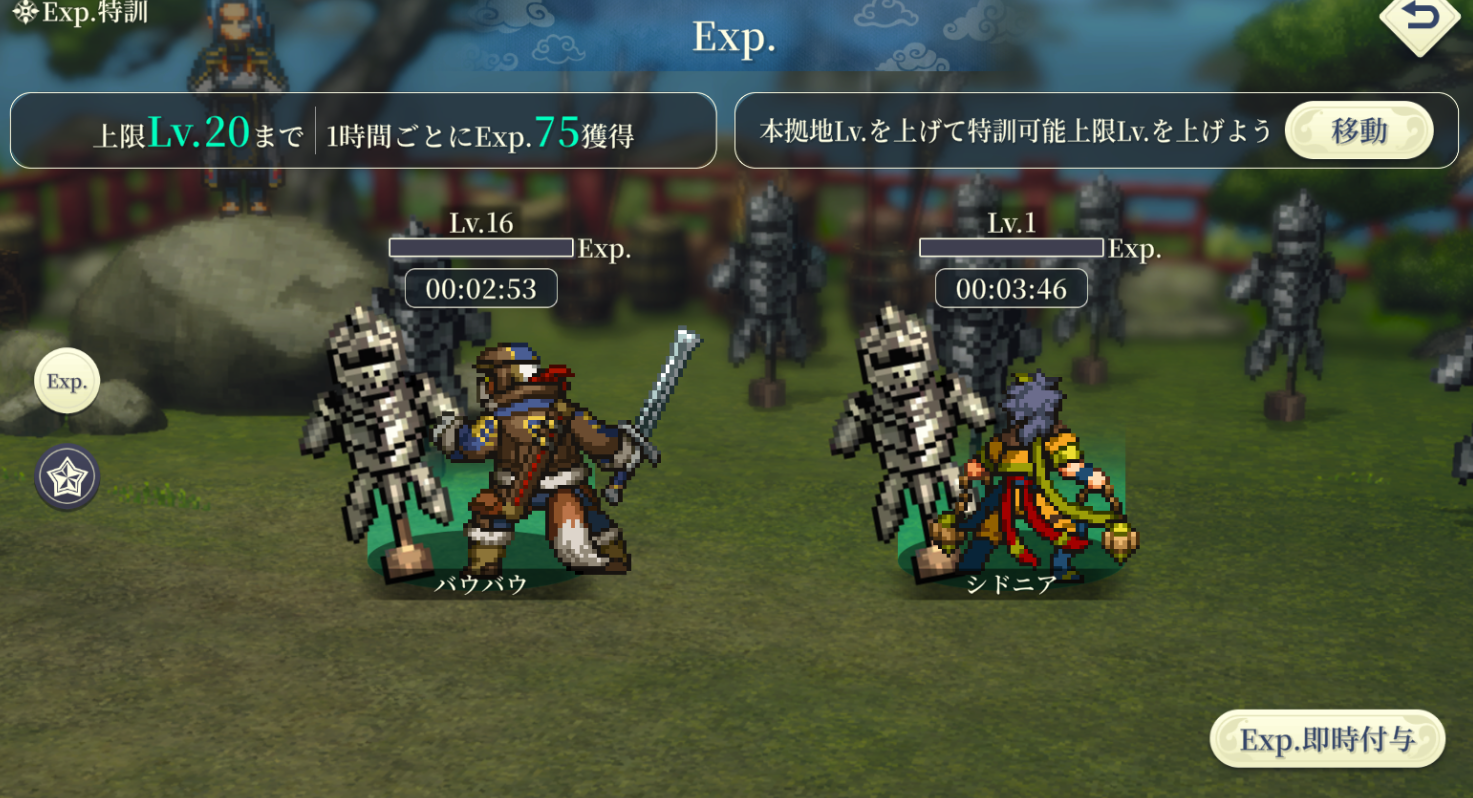
The second feature lets you park two characters who then gain experience every hour while you are away. The level ceiling starts at 20 and rises as you upgrade the village, so it stays relevant well past the early game.
Hourglasses skip time in blocks of 1, 3, and 12 hours, which is how you convert a stockpile into an immediately usable character.
The right habit is to keep two characters you intend to play later in these slots at all times. An empty slot is pure waste, and the whole point of the system is to broaden your bench for the matchup-based fights.
Shard training
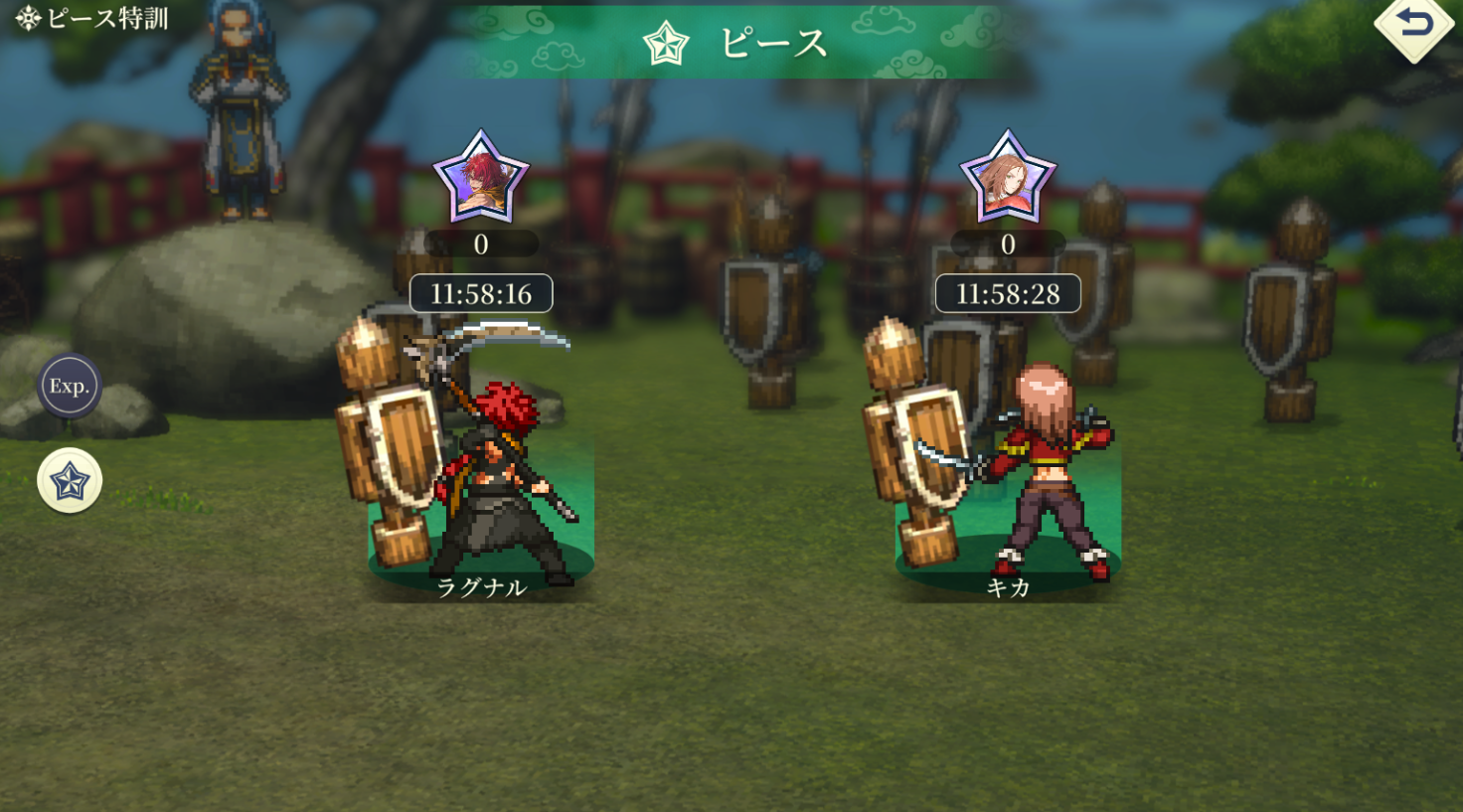
The last feature is how you limit break gacha characters without pulling duplicates. You set two gacha characters and collect shards for them over time.
The rate is roughly one shard every 12 hours, and a duplicate costs 175 shards. That works out to close to three months per duplicate from this source alone, so treat it as a long background process rather than a plan.
You can shorten that considerably with universal shards, which come from various exchanges and events and can be spent on any SSR, and by dismantling duplicates of SSRs you have already maxed.
The 108 Stars Tablet
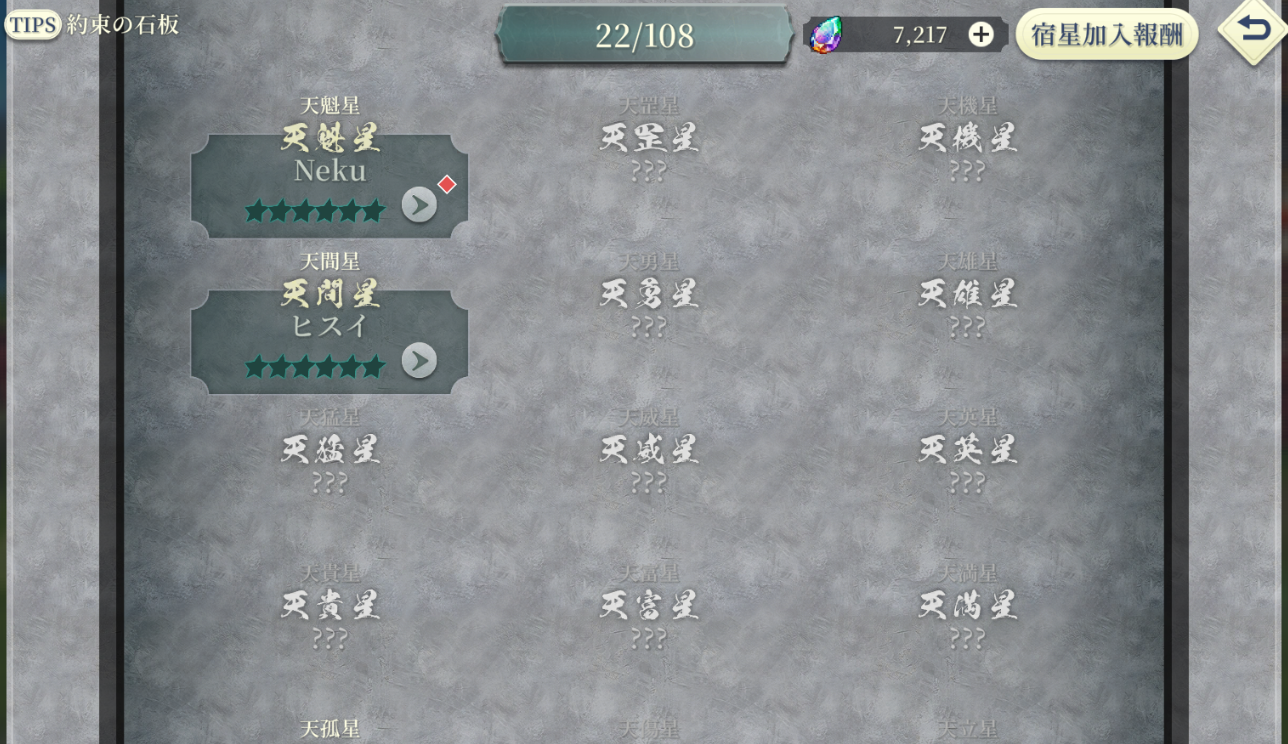
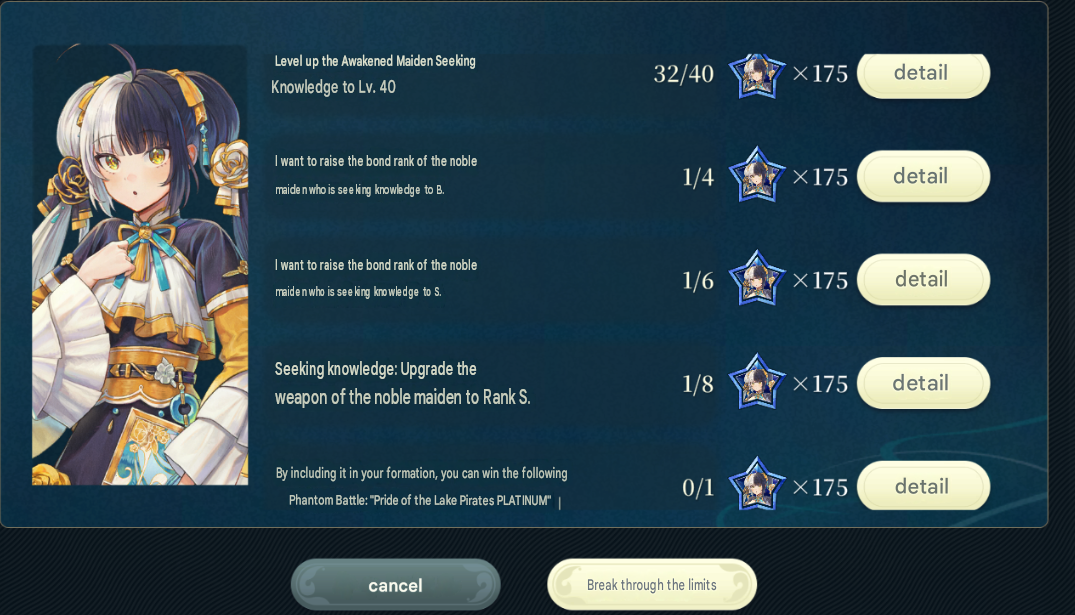
The Tablet of Promise unlocks after chapter 1, and it is the reason bond levels are worth farming aggressively. It supplies duplicate material for every non-gacha character, which means limit breaks you would otherwise need the gacha for.
The missions are the same for every character, with the sole exception of the main character:
| Mission |
|---|
| Reach level 30 |
| Reach level 40 |
| Raise bond to rank B |
| Raise bond to rank S |
| Upgrade their weapon to rank S |
| Clear a specific Phantom Duel on Platinum difficulty with them in the party |
Four of those six run through cooking and the trading post, which is why the headquarters loop and the combat loop are the same loop. For the last one, the Phantom Duel weakness tables cover what each line-up resists, and the Phantom Duels section lists which characters have a medal waiting on which duel.
Recruiting Non-Gacha Characters
Tablet progress only matters for characters you actually have, and a large share of the roster is recruited outside the gacha. Look for ? markers on your maps; if you cannot see one, either the story has yet to reach it or you have already recruited that companion. The full list of who joins where, chapter by chapter, is on the 108 Stars page.
Three recruits sit outside the story entirely and are easy to miss:
- Clear 30 sidequests to unlock one companion — a target you will pass naturally while raising city affinity for trading.
- Run the Nightmare Battlefield daily until the companion who administers it joins you. With enough medals you can also buy
 Tsuranami
from the exchange, and she is not a gacha character, which makes the daily runs worth it on their own.
Tsuranami
from the exchange, and she is not a gacha character, which makes the daily runs worth it on their own. - Clear floor 50 of the Mirage Tower to unlock the companion who runs the tower.
Related Suikoden STAR LEAP Resources

Guide
Gear, Accessories and Runes: What to Farm
Equipment ranks and slots, elemental gear sets from EX bounties, why disguises cost more than they give, which accessory each role wants, and the runes worth 99,999 Potch in Suikoden STAR LEAP.

Guide
Buffs, Debuffs, and Positioning: The Hidden Half of Combat
Stat stages and their speed multipliers, how percentage buffs differ from stacking ones, row-based support passives, and how to aim a unite attack in Suikoden STAR LEAP.

Guide
Combat and Team Building: Elements and Formation
How damage, resistances, breaking, and turn order work in Suikoden STAR LEAP, and how to build a party that beats the fight in front of you.
News
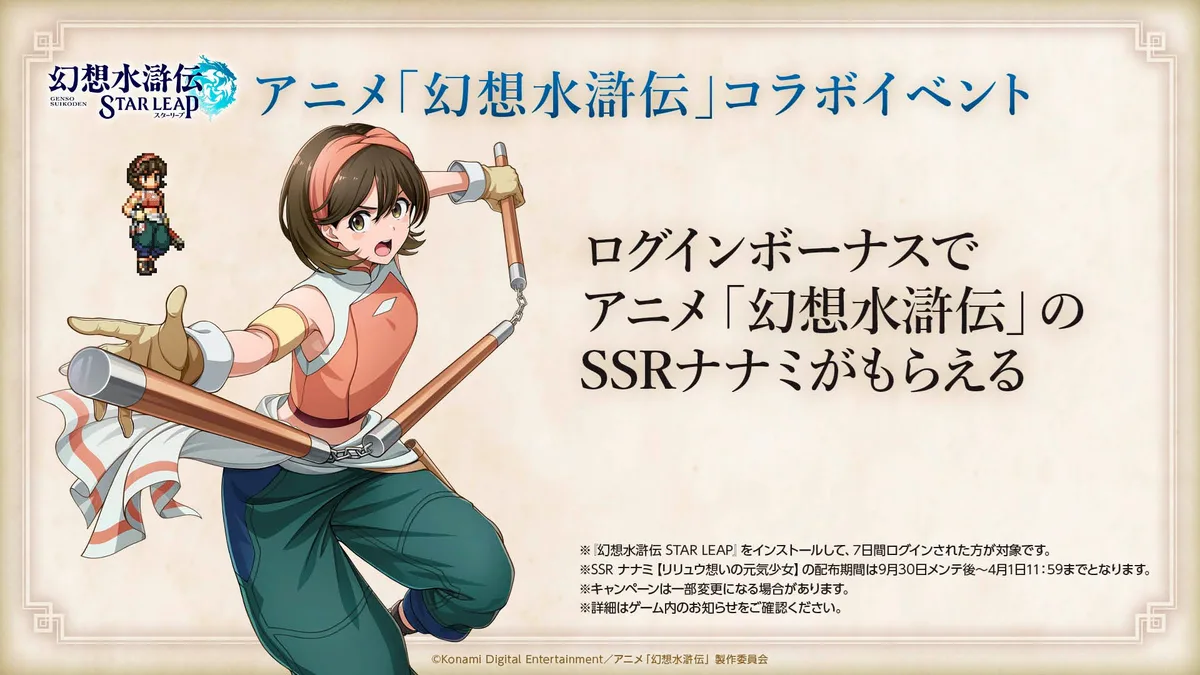
Suikoden STAR LEAP: New Event RPG and a Free SSR Nanami
A four-episode Event RPG opens September 30 with up to 24,000 Fantasy Stones and two new SSRs, alongside a login bonus for Suikoden: The Anime's Nanami.

News
Suikoden STAR LEAP: Chapter 3 Story and a QoL Overhaul
New Chapter 3 story, the Emotions & Secrets banner with Rachana, Gremio and Hou, badges, and a September 21 update with bulk trading and eight party slots.