

































What It Is
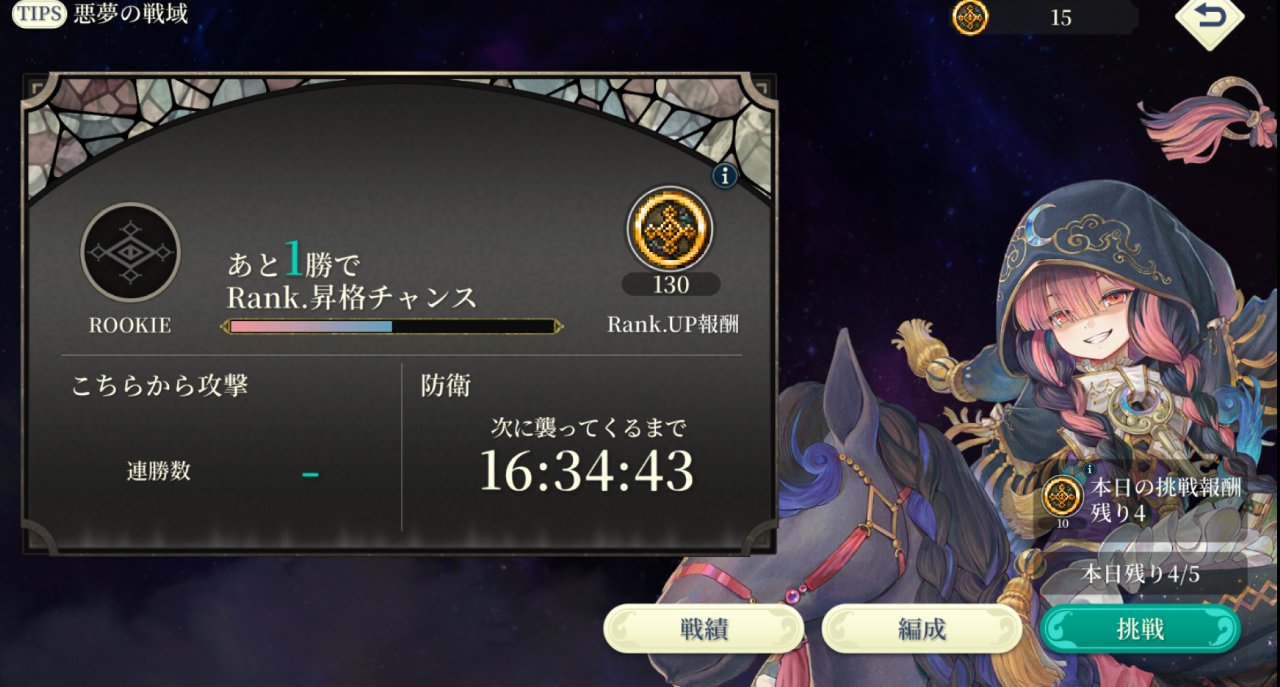
Nightmare Battlefield is the war battle mode, and it is the one piece of content most worth doing daily from the moment it unlocks. The rewards are medals, and medals buy two things you cannot easily get elsewhere: universal shards for limit breaking any SSR, and
 Tsuranami
outright. She is not a gacha character, so the exchange is the only way to her.
Tsuranami
outright. She is not a gacha character, so the exchange is the only way to her.
You get 5 entries per day. Entries can be refreshed with crystals at a steep price, and that is a poor trade in your first days — let your teams grow first and the same entries will go much further.
The mode is not player-versus-player to begin with. It runs as pure player-versus-environment war until you unlock
 Yume
, the companion who administers it, which happens by running the mode daily.
Yume
, the companion who administers it, which happens by running the mode daily.
Running a Battle
The loop is short and mostly automated.
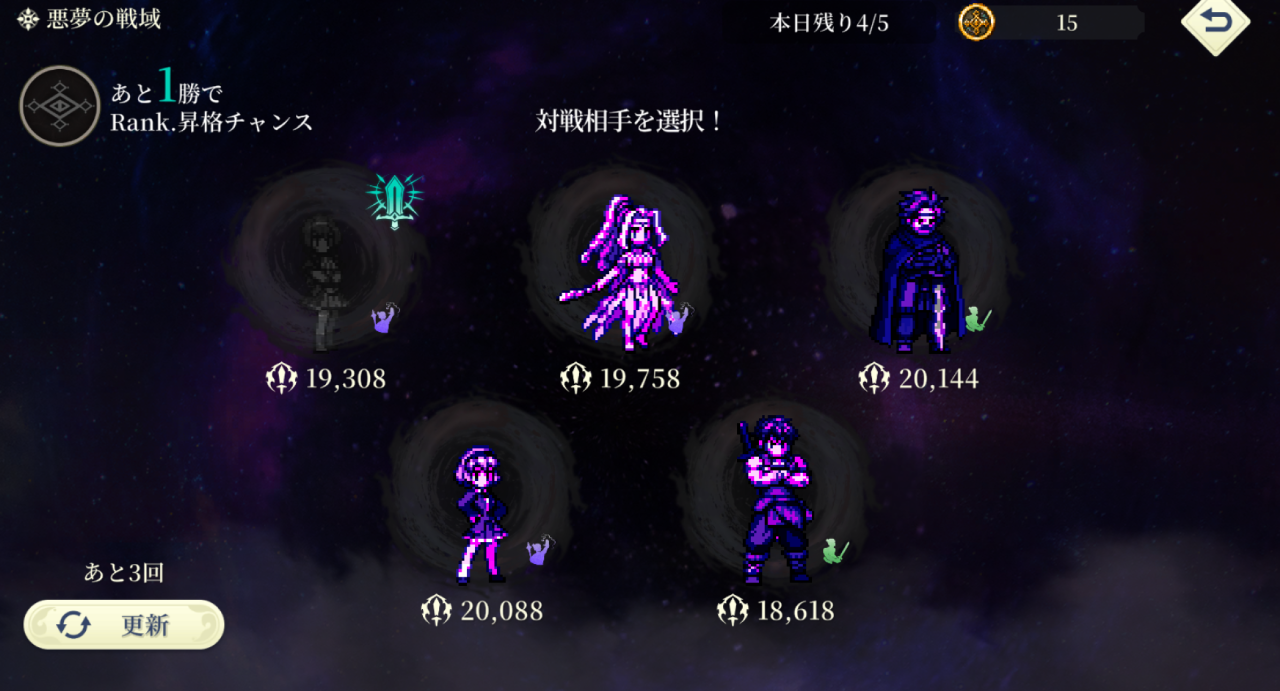
- You fight Nightmares, and you can refresh the opponent if the lineup looks beyond you. Use this freely, since a refresh is cheaper than a loss.
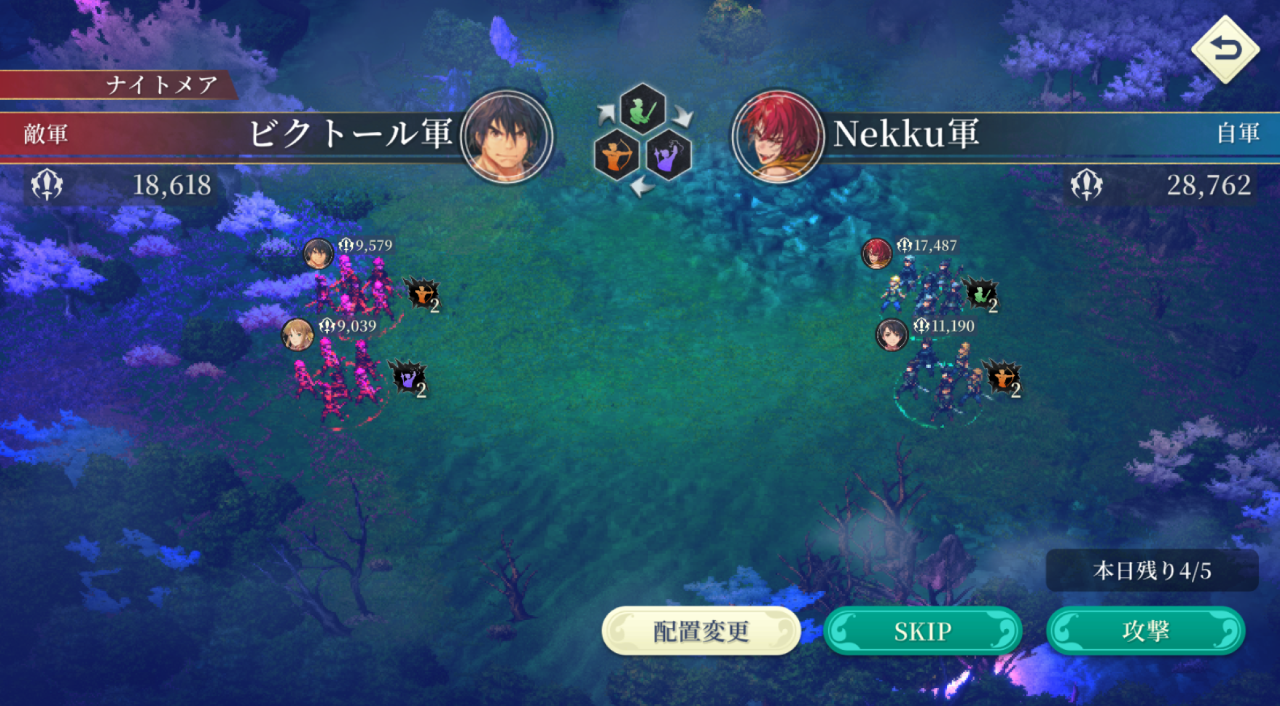
- Before committing, you can inspect the opposing lineup and arrange your troops against it. This is the whole decision, and it is worth the thirty seconds.
- You can skip the battle phase and jump to the result if you have no interest in watching it play out.
- Winning pays medals and fills your promotion bar. Losing still pays some medals, and you cannot lose rank, so a failed attempt costs you an entry and nothing else.
Nightmares also attack you three times each day on their own, with the results reported the following day.
Ranks and Promotion
Winning wars fills a bar, and when the bar is full you fight a promotion battle to move up a rank. Each new rank pays a one-time medal bonus, which makes climbing worth pursuing on its own terms.
The trade-off is that higher ranks put stronger Nightmares in front of you. Since losses cost nothing but the entry, this is a trade worth taking: climb until the promotion battles start failing, collect the one-time bonuses along the way, and settle at whatever rank your roster clears comfortably.
Spending Medals
Two purchases justify the daily runs on their own:
- Universal shards, which count toward limit breaking any SSR in place of that specific character’s shards. Given that shard training produces roughly one shard every 12 hours against 175 for a duplicate, universal shards are the fastest limit-break currency available to a free player.
- Tsuranami, bought outright from the exchange.
Everything else in the shop is a bonus on top of those two.
The PVP Mode
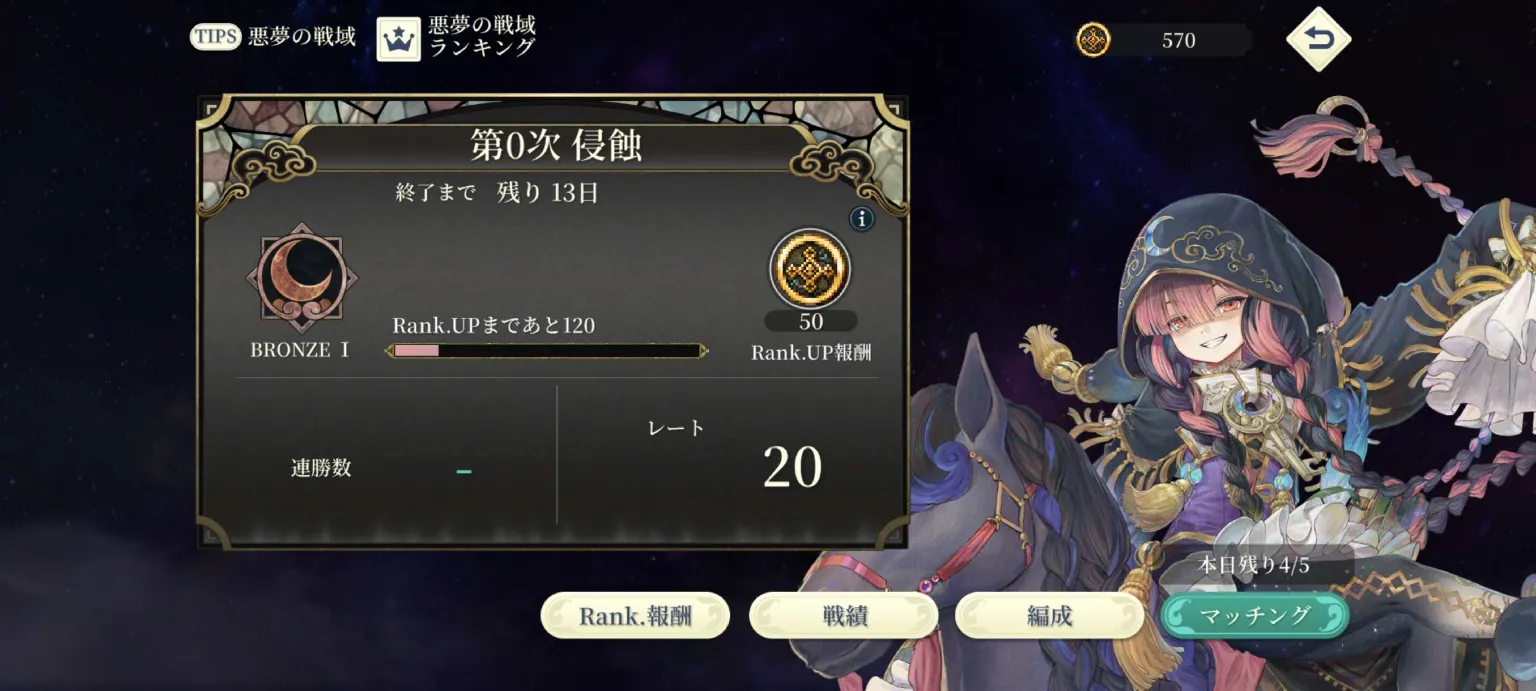
Once your rank climbs high enough — around the point where enemy troops sit at 105,000 power — the mode opens up into ranked player-versus-player with points and leaderboards.
What changes:
- You no longer choose your opponent. Pressing Attack matches you against a random player near your rank, so your teams have to be ready before you press it rather than arranged per fight.
- It runs in seasons, which pay out medals and titles when they close.
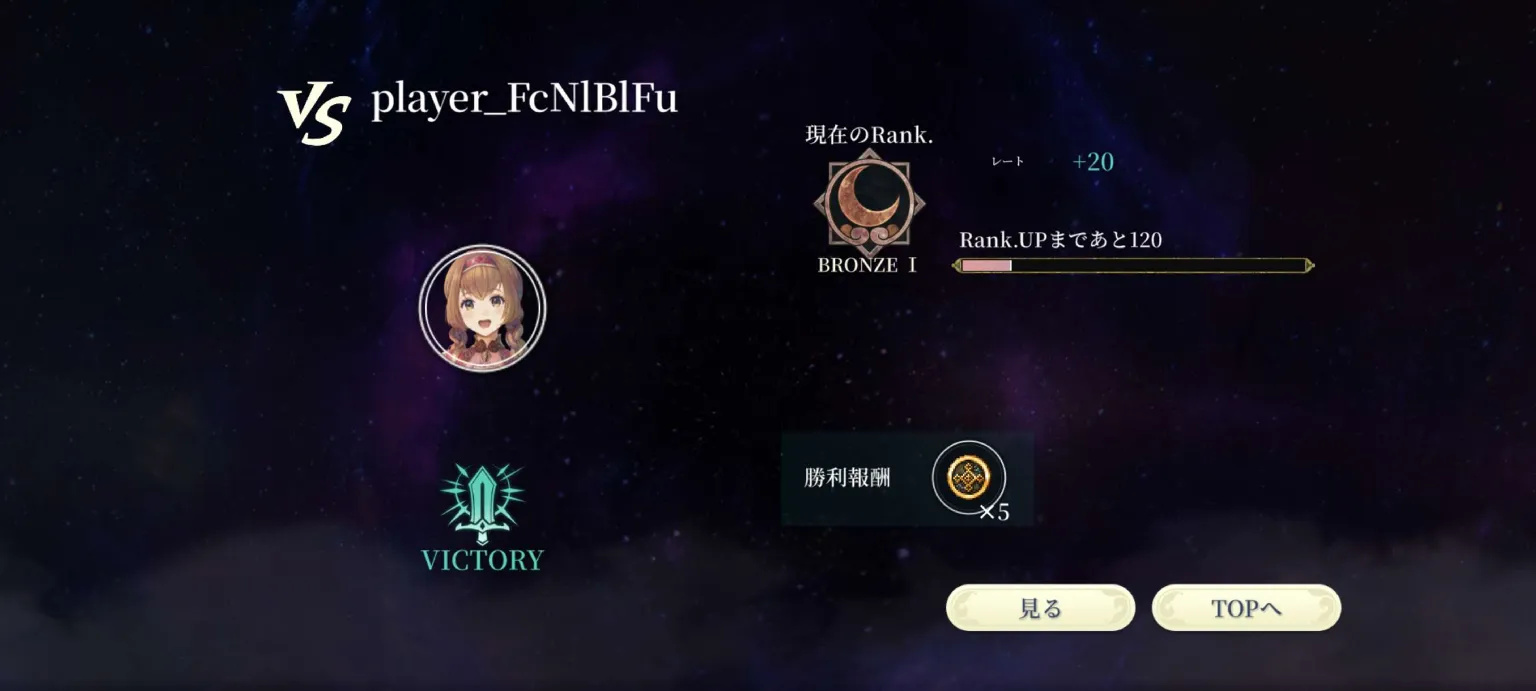
- Winning awards points and medals. Losing currently costs you no points, and it awards no medals either.
- Reaching a rank for the first time pays a first-time medal bonus.
- You still get 5 attacks per day.
Matchmaking is loose enough that a lopsided fight is normal — being matched against a 170,000-power roster while sitting at 125,000 happens, and there is nothing to do about it except spend the attack and move on. Since a loss costs no points, there is no reason to hold attacks back.
Whether being attacked or successfully defending awards points is not yet clear.
Daily Habit
Run all five entries every day, refresh any Nightmare that looks out of reach, skip the animations, and bank the medals toward universal shards. It takes a couple of minutes and it is one of the few systems in the game where a loss costs you almost nothing.
Related Suikoden STAR LEAP Resources

Guide
Gear, Accessories and Runes: What to Farm
Equipment ranks and slots, elemental gear sets from EX bounties, why disguises cost more than they give, which accessory each role wants, and the runes worth 99,999 Potch in Suikoden STAR LEAP.

Guide
Buffs, Debuffs, and Positioning: The Hidden Half of Combat
Stat stages and their speed multipliers, how percentage buffs differ from stacking ones, row-based support passives, and how to aim a unite attack in Suikoden STAR LEAP.

Guide
Character Growth: Cooking, Training and Stars
How bond levels, the Talent Tree, offline EXP, shard training, and the Tablet of Promise combine to raise characters in Suikoden STAR LEAP.

News
Suikoden STAR LEAP: New Event RPG and a Free SSR Nanami
A four-episode Event RPG opens September 30 with up to 24,000 Fantasy Stones and two new SSRs, alongside a login bonus for Suikoden: The Anime's Nanami.

News
Suikoden STAR LEAP: Chapter 3 Story and a QoL Overhaul
New Chapter 3 story, the Emotions & Secrets banner with Rachana, Gremio and Hou, badges, and a September 21 update with bulk trading and eight party slots.